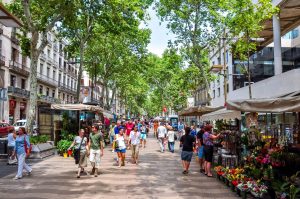
Most people in Barcelona will tell you the same thing about La Rambla: avoid it. Too crowded, too expensive, too full of souvenir shops and bad paella. Parts of that criticism are fair. Tourism has changed the area dramatically over the years. But treating La Rambla as completely lost ignores the people and food culture still rooted there.
At Barcelona Cooking, we work on La Rambla every day. Our kitchen sits inside a neighborhood many people dismiss without looking closely. What we see instead is a place where long-standing market vendors, cooks, restaurant owners, and residents continue to maintain real culinary traditions beneath the noise.
There is also a more complicated truth: La Rambla is not defined only by what tourism has done to it, but by how different groups continue to negotiate its use. Alongside businesses that cater to visitors, there are cultural associations, neighborhood initiatives, and long-standing institutions working to keep parts of it grounded in local life. Organizations like Amics de La Rambla have spent years advocating for this balance—supporting historic businesses, cultural programming, and everyday uses of the street that keep it connected to the city beyond tourism.
Lorca captured something of that complexity long before today’s debates. Federico García Lorca wrote of La Rambla as a street “rich in sounds, abundant in breezes, beautiful in encounters,” the only street he wished would never end. That version of La Rambla still exists, but it is not always visible at first glance.
The Boqueria Is Still Part of Daily Life
The Mercat de Sant Josep de la Boqueria is often described as something built entirely for visitors now. Tourism has absolutely transformed the market, but that version of the story is incomplete. Many Catalan shoppers, chefs, and restaurant workers still buy ingredients there regularly, especially in the mornings before the crowds fully build.
Go early and you will see seafood deliveries arriving, vendors discussing produce quality with returning customers, and cooks shopping for lunch service. The market still functions as part of the city’s food system. You just have to experience it outside the pace of tourism.
Barcelona Cooking has worked with many of the same providers for years. Our classes are built around those relationships. We learn directly from the people selling the ingredients: which tomatoes are best that week, how olive oil changes from region to region, what seafood is truly local, what dishes belong to which season.
Five places on La Rambla that are worth knowing
1. Louro
Inside the Centro Galego, Louro sits slightly removed from the main flow of La Rambla. It draws on Galician cooking traditions and feels more tied to community networks than to passing tourism.
2. Casa Beethoven
A historic sheet music shop that has survived decades of change on La Rambla. It is one of the clearest reminders that this street has always held cultural infrastructure, not only food and leisure.
3. Cañete
A tightly run bar-restaurant where counter dining, shared plates, and fast-moving service still reflect a very Barcelona way of eating. Busy, but rooted in local dining habits rather than performance.
4. Flores Laura
One of the flower stalls that continues a long tradition on La Rambla. The presence of florists along the boulevard is one of its oldest and most consistent features, softening the density of the street itself.
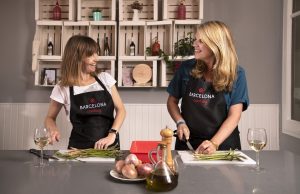
5. Barcelona Cooking
One of the easiest ways to move beyond tourism is participation. Understanding why sofrito matters, how paella actually differs region to region, or what makes a proper tortilla changes the way you experience the city afterward. At Barcelona Cooking, the goal is not just to cook for a few hours, but to connect people more deeply to the ingredients, vendors, and food culture already existing around them.