What is Fideuá?
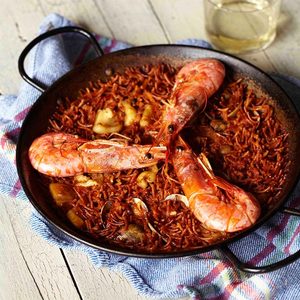
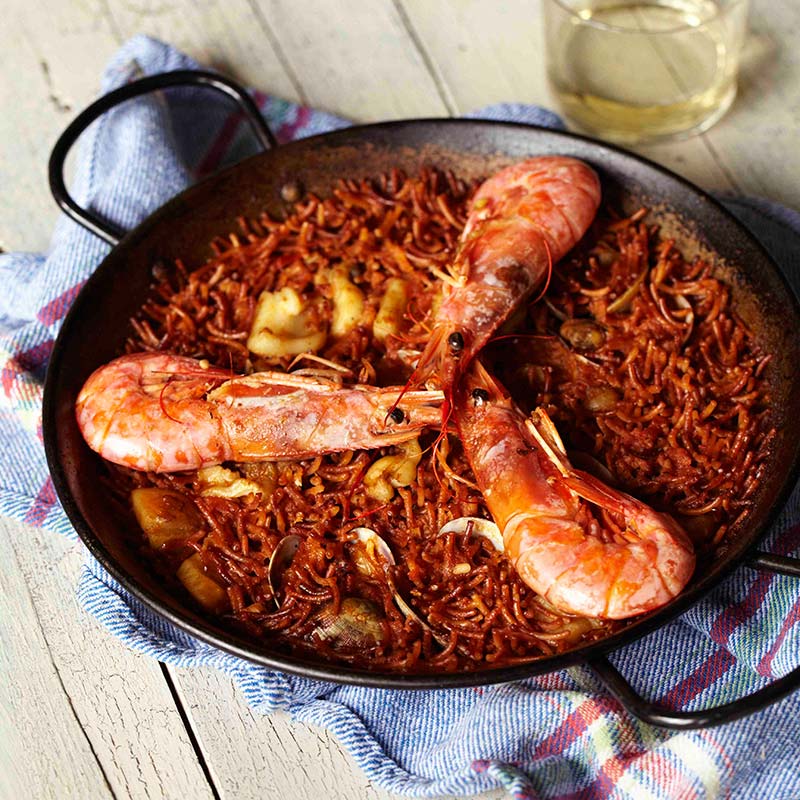
If you have ever walked past coastal taverns along the Catalan seafront, you have likely seen wide, shallow pans simmering on sunny terraces. At first glance, you might mistake it for paella—until you look closer and notice short, golden strands of pasta curling upwards instead of grains of rice.
That dish is Fideuà (pronounced fee-day-WAH), one of Catalonia’s most beloved maritime traditions.
While seafood paella gets most of the global spotlight, ask almost any Barcelona local or coastal fisherman what they prefer on a Sunday afternoon, and there is a high chance they will point you toward a steaming pan of fideuà.
Pasta vs. Rice
What makes fideuà fundamentally different from paella isn’t just swapping one carb for another—it is a completely different culinary technique.
1. The Toasting Step (El Sofregit de Fideos)
In a standard paella, uncooked rice is added directly to simmering broth to absorb liquid slowly. In fideuà, the raw dry noodles are first toasted directly in extra virgin olive oil inside the wide pan until they turn a deep, golden-amber color. This crucial step coats the pasta in fat, preventing the noodles from becoming mushy when liquid is introduced and locking in a nutty, toasted flavor base.
2. Flavor Absorption
Short-grain rice absorbs liquid through starches expanding over low heat. Pasta noodles, particularly hollow or thin varieties like fideus No. 1 or 2, act like tiny sponges. Because they are boiled down rapidly in a rich, concentrated fish stock (fumet), the noodles trap the seafood oils directly on their surface, delivering an intense burst of coastal flavor in every bite.
3. Fideos al Vent (Noodles in the Wind)
The ultimate mark of a well-cooked fideuà is visual. In the final two minutes of cooking, as the remaining broth evaporates, the heat is cranked up. The sudden burst of dry heat causes the tips of the short noodles to crisp up and curl straight into the air—a prized texture local chefs refer to as fideos al vent (“noodles in the wind”).
Why Autumn Is the Ultimate Season for Fideuà
While tourists associate seafood pans strictly with hot summer beach days, local cooks in Barcelona know that autumn is actually the golden hour for cooking fideuà.
Autumn marks the intersection of two iconic Catalan food seasons: peak cuttlefish harvest and the arrival of wild mountain mushrooms (bolets).
The “Mar i Muntanya” (Sea and Mountain) Shift
Catalan gastronomy is famous for Mar i Muntanya—the traditional philosophy of pairing coastal seafood with rustic interior ingredients in the same pan. In summer, fideuà relies heavily on light shellfish, sweet red prawns, and clear broths. But as the cooler autumn air rolls into Barcelona, local kitchens pivot:
- In-Season Cuttlefish (Sépia): Autumn is prime season for native cuttlefish along the Catalan coast. Tender, sweet, and rich in natural umami, cuttlefish provides a robust bite that holds up beautifully alongside dense autumn flavors.
- Wild Mushrooms (Bolets): October and November bring mushroom hunters into the damp forests of the Pyrenees and Montseny. Local markets like Sant Antoni and La Boqueria overflow with saffron milk caps (rovellons), chanterelles, and golden yellowfoots (camagrocs).
When tossed into the slow-cooked onion and tomato base (sofregit), wild mushrooms release an earthy, woody aroma that cuts through the briny depth of the fish stock. The result is a richer, darker, and far more comforting pan of noodles tailored perfectly for crisp autumn afternoons.
Experience Fideuà at Barcelona Cooking
At Barcelona Cooking, we believe the best way to understand Catalan food culture is to roll up your sleeves and make it yourself. We prioritize fresh, seasonal ingredients sourced directly from local market stalls every morning—meaning our dishes naturally shift with the calendar, from autumn wild mushrooms to peak summer seafood.
While our daily group workshops feature classic seafood paella, Fideuà is available as an exclusive specialty menu for private cooking classes and corporate team-building events. Whether you are planning a holiday party, an office retreat, or a private celebration, your group will learn how to master this classic dish.